- May 20, 2026
- Posted by: admin
- Category: BitCoin, Blockchain, Cryptocurrency, Investments


The post Ethereum Price Outlook: Why Whale Selling and ETF Outflows Could Drag ETH Lower appeared first on Coinpedia Fintech News
Ethereum price action is beginning to flash fresh warning signs as a combination of whale selling, ETF outflows, and weakening price structure raises concerns over its near-term outlook. As volatility returns and confidence starts to weaken around key levels, traders are increasingly watching whether this shift reflects a temporary cooldown, or something more meaningful.
That focus is now turning toward why whale selling and ETF outflows could drag ETH price lower, and whether Ethereum is at risk of losing another major support zone.
Whale Selling Raises Questions Over Ethereum Conviction
One of the more notable warning signs for Ethereum comes from the behavior of large holders. Recent market data suggests that more than 60 whale wallets holding over 10,000 ETH have either significantly reduced exposure or fully exited positions over recent weeks. Whale movements are closely watched because large holders often react early to changing market conditions, particularly during periods of uncertainty.
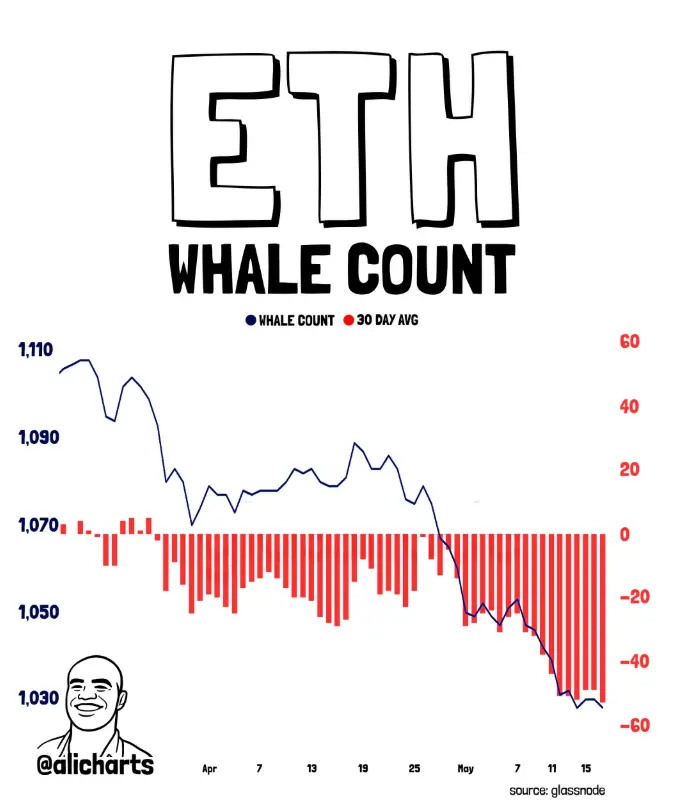
While whale exits do not always signal panic selling, a decline in high-value holders during periods of weakening momentum often reflects profit-taking, portfolio rotation, or reduced confidence in short-term upside potential. Ethereum has repeatedly struggled to reclaim higher resistance zones despite broader crypto market resilience, increasing speculation that large players may be adopting a more defensive stance.
ETF Outflows Add Fresh Institutional Pressure
Beyond whale activity, institutional sentiment appears to be softening as well. Ethereum spot ETFs recently recorded approximately $62.3 million in net outflows, with a major share reportedly linked to BlackRock-related ETH selling activity. ETF flows have become an increasingly important sentiment gauge for crypto markets, particularly for Ethereum and Bitcoin.
𝗝𝗨𝗦𝗧 𝗜𝗡:
Ethereum spot ETFs recorded a net outflow of $62.3M on May 19.
BlackRock clients sold $59,400,000 worth of $ETH.
pic.twitter.com/LZFoVVdH8c
— DustyBC Crypto (@DustyBC) May 20, 2026
While strong inflows tend to reinforce bullish conviction, persistent outflows often signal institutional caution, profit-taking, or capital rotation into other opportunities. The concern for ETH bulls is that these outflows arrive just as price action is beginning to weaken technically. If institutional demand remains subdued, ETF selling could become an additional headwind for recovery attempts.
Ethereum Price Outlook: Breakdown Structure Puts $2,000 Support in Focus
Ethereum’s price structure has started to weaken after failing to sustain momentum near the $2,500 resistance zone. ETH recently lost an important ascending trendline support, slipping below a structure that had previously supported recovery attempts. The breakdown suggests that bullish momentum may be fading, especially as price continues forming lower highs beneath resistance.
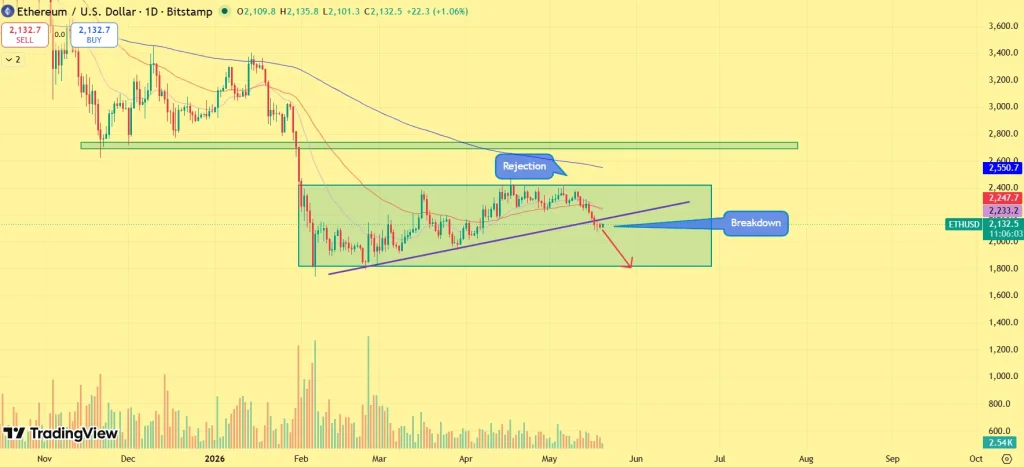
The next major area to watch sits near the $2,000 psychological support level, which now emerges as the immediate downside target if selling pressure intensifies. Historically, this zone has acted as a strong area of buyer interest, making it a critical level for market sentiment. For bulls to regain control, Ethereum would likely need to reclaim the $2,400–$2,500 resistance range, where repeated rejection has capped upside attempts. Until then, short-term risks remain tilted to the downside.
Can Ethereum Avoid a Deeper Correction?
Ethereum now finds itself at a critical crossroads. Whale positioning is weakening, ETF flows have turned negative, and price action is beginning to lose structural support, all at a time when broader market confidence remains fragile. The immediate focus shifts toward whether ETH can defend the $2,000 level, which may determine whether this becomes a temporary reset or a deeper corrective phase. For now, traders remain cautious, as the combination of whale selling and institutional outflows continues to cast a shadow over Ethereum’s short-term outlook.