- January 15, 2026
- Posted by: admin
- Category: BitCoin, Blockchain, Cryptocurrency, Investments
Russia is preparing a transition in their crypto market regulations, with a new draft bill expected to reach the State Duma during the spring 2026 parliamentary session.
The proposal, led by Financial Markets Committee chairman Anatoly Aksakov, would remove digital assets from the country’s “special financial regulation” category and allow wider participation in crypto markets. While the move signals broader acceptance of crypto in everyday finance, it also introduces clear risk limits.
If approved, the legislation would represent one of Russia’s most significant policy changes regarding digital assets in recent years, reshaping both domestic trading and cross-border cryptocurrency use.
Retail Access Gets Clear Investment Limits
Under the draft bill, non-qualified investors, those who do not meet professional or institutional standards, would be allowed to buy cryptocurrencies worth up to 300,000 rubles (about $3,800). The cap is designed to mitigate financial risk for everyday users while still providing them with access to the market.
Qualified and professional participants, including financial firms, would not face similar restrictions. This two-tier system reflects the government’s approach to striking a balance between market access and investor protection.
Regulators are also considering a risk-awareness test for retail participants. The Bank of Russia previously proposed that non-qualified investors undergo a basic assessment before trading digital assets, ensuring they understand the potential volatility and associated financial risks.
Similarly, the central bank has reaffirmed its opposition to anonymous and privacy-focused cryptocurrencies. These assets would remain restricted under the new framework to maintain transparency and regulatory oversight.
Cross-Border Payments and Regulatory Implications
Beyond domestic trading, the bill could expand the use of crypto for international settlements. Aksakov has stated that the framework may enable Russian-issued digital tokens to be used in foreign markets, potentially facilitating cross-border payments.
This aligns with Russia’s earlier decision to legalize cryptocurrency for certain international transactions, following Western sanctions that limited access to traditional banking systems. Digital assets are increasingly viewed as an alternative tool for trade and financial transfers where conventional channels are restricted.
Officials have also discussed recognizing crypto mining as an export-related activity, given its impact on foreign currency inflows despite the lack of physical cross-border movement.
What It Means for Investors and the Market
For retail investors, the overhaul means regulated access to crypto within defined limits. The 300,000-ruble cap and potential testing requirements aim to reduce systemic and personal financial risk while still allowing participation in digital asset markets.
For the broader market, the change signals a shift toward integrating cryptocurrency into standard financial systems, rather than treating it as a niche or experimental asset class.
Russia is also advancing its digital ruble project, with a full rollout across state financial systems expected by September 2026. Together, these developments suggest a wider push toward modernizing the country’s digital financial infrastructure.
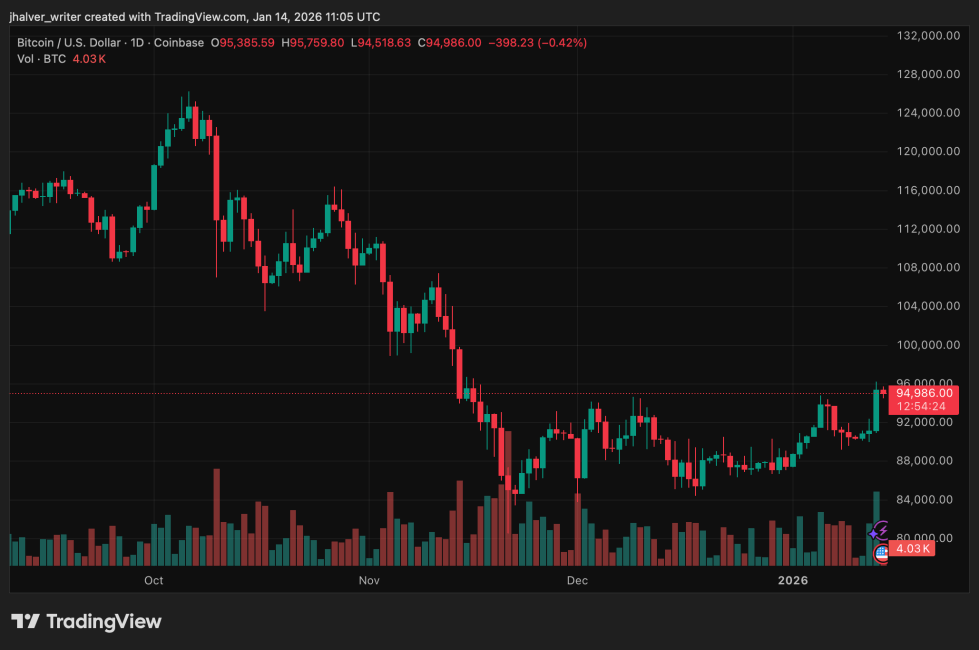
Cover image from ChatGPT, BTCUSD chart from Tradingview