- April 6, 2026
- Posted by: admin
- Category: BitCoin, Blockchain, Cryptocurrency, Investments
Bitcoin Magazine
SecondHQ’s Bark Boasts New era of Bitcoin Payments, drawing in former Blockstream developers
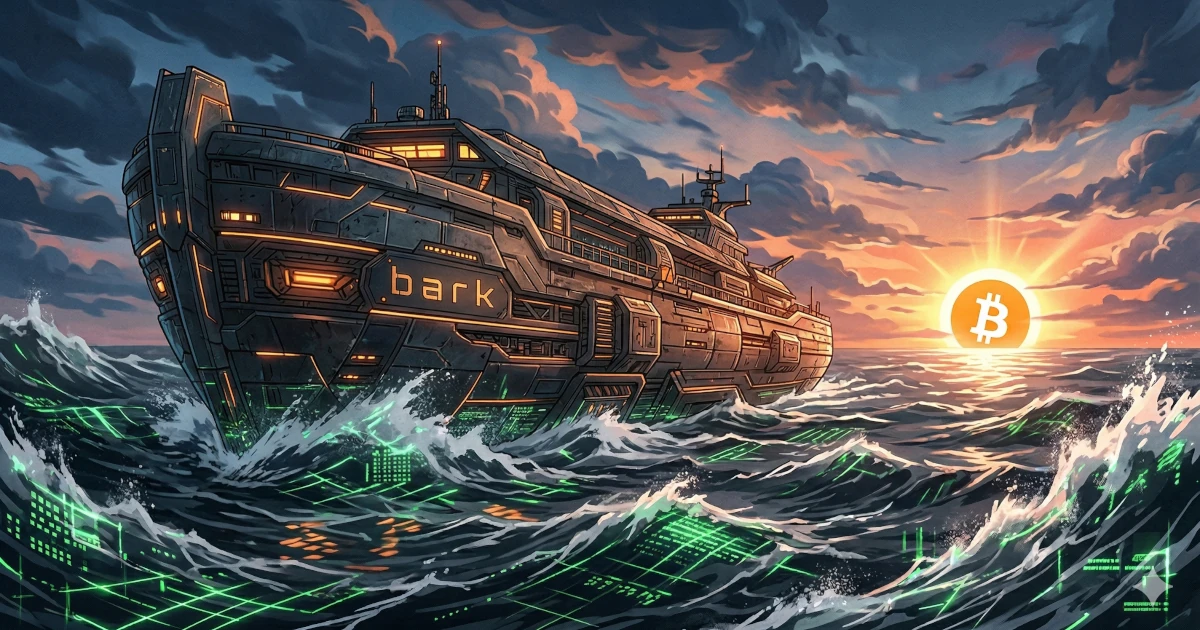
SecondHQ, a new Bitcoin development lab, has gained attention recently as it drew in yet another former Blockstream employee known as “Grubles”, with over 8 years of engineering at the company. Bark, SecondHQ’s lead product, promises to deliver a next-generation “Fast, low-fee, self-custodial” wallet.
Alongside Grubles, other former Blockstream employees have joined the SecondHQ, such as Neil Woodfine (CMO), Steven Roose (CEO), and Erik De Smedt (CTO). The lab is currently focused on the cutting-edge of end-user Bitcoin wallet technology. In this niche of the industry, the Ark protocol is the new kid on the block, a layer two payments protocol that makes different trade-offs than the Lightning Network to deliver end users scalable self-custody and payments features at a low cost. Bark is SecondHQ’s custom implementation of the Ark protocol, designed for interoperability with the Lightning Network.
“The technique used for Bark is different from payment channels in Lightning, but the two are actually very complementary.” Grubles told Bitcoin Magazine in an exclusive interview, adding that “At Second, we’ve chosen to build an Ark that is focused entirely on making Bitcoin onboarding and payments excellent.” Their website describes an Ark-to-Lightning bridge that lets users pay Lightning invoices directly from an Ark balance with no channels, liquidity, or LSPs required. Handled atomically.
According to Grubles, the company has raised 5.1M from a private investor, with a team of 11 people working on Bark. Deep technical documentation about the project can be found at second.tech, with the main net launch expected “Soon”.
Interested users can test out making Bark payments on Signet. “I highly recommend doing so since it’s such a shift in the way we can do onboarding and payments,” said Grubles, encouraging early adopters to test out the tech.
Scaling Bitcoin Self-Custody
The most impressive claim made by Bark is the promise of self-custody at a low cost. While it is relatively trivial to scale Bitcoin payments in a custodial manner, as demonstrated by apps like Wallet of Satoshi, or as is being done now by the payments giant Cash App. Delivering self-custody for relatively small amounts of value to millions of people is another matter entirely.
Onchain Bitcoin can handle roughly 7 transactions of per second, which does not scale to too many users if they are all doing maxinym self custody onchain transactions multiple times a day. To quote Knifefight’s excellent article on the matter on Bitcoin Magazine, tittled “Free As In Freedom Is Not Free As In Beer”; “Bitcoin confirms ~0.4M transactions/day. That’s one transaction/person every ~55 years, assuming no one is born or dies while waiting.” Onboarding users with onchain Bitcoin can also be rather awkward, as wallets correctly signal that deposits made to new users are pending confirmation until confirmed, which can take up to 30 minutes while blocks are mined.
To address the challenges of scaling Bitcoin payments to the whole world, while retaining the cypherpunk and decentralization qualities of onchain self-custody, the Lightning Network was developed, and for the most part, it has worked, but with significant trade-offs. Self hosting a sovereign Lightning node, — while easier than ever today — still requires a significant learning curve, or specialized hardware that pushes all the right buttons for you. Both of these barriers to entry are too much for most people who don’t care about tech and just need to be able to pay a bill securely.
Mobile wallets like Phoenix have taken Lightning Network-style self-custody to end users, but with some caveats. Users need to trust Phoenix with some extreme scenarios, while they also give up a significant amount of privacy, since Acinq, the app developer, needs to know user balances pseudonymously to process transactions. Users are also locked into Phoenix as a liquidity provider, paying often higher fees than custodial lightning alternatives. The app is non KYCed, and offers users self-custody recovery paths, and an excellent feature set, but still falls short of the user experience expected from cash, where onboarding is as easy as handing a new user some paper money — no liquidity challenges, channel managment or onboarding fees — and payment is as easy handing over a bill and calculating the cash back for change.
Phoenix specifically works very well after users have been onboarded, but the process can cost over $10 dollars in SATS and take over 30 minutes, which is too high a cost when trying to sell Bitcoin as digital cash, and trying to onboard new people on the spot.
Other companies have attempted to solve these scaling and user experience challenges by leveraging Blockstream’s Liquid Network, an international federation of Bitcoin corporations that operate an alternative Bitcoin-compatible blockchain with fast block times and much larger on-chain capacity. Wallets like Bull Bitcoin or Aqua onboard users with Liquid’s LBTC, which can take a minute or less to confirm a transaction and then offer them a built-in swap exchange to onchain BTC, or the Lightning Network for payments compatible with the broader Bitcoin market.
Both of these solutions work ok, but Bark believes they can do better. The reasonable self-custody recovery paths that onchain Bitcoin users know and love, with the instant payment velocity of the Lightning Network, are both delivered upon app download to users, without the onboarding roadblocks of a Liquid side chain or Lightning channel management.
“I think the UI for Bark wallets will be simplified in comparison, considering how you won’t need to differentiate between L-BTC and BTC,” said Grubles of current Liquid and Lightning solutions. “This is important when thinking of onboarding new Bitcoin users. You don’t want to bombard them with information that can be confusing.”
“Don’t get me wrong, we love Lightning,” added Grubles, explaining that “Many of us at Second have worked on projects like Blockstream’s Core Lightning or are currently working on things like the rust-lightning library…So I do not say it lightly that Lightning is in Second’s DNA. With a Bark wallet, you can receive some bitcoin and begin doing Lightning payments literally in seconds. All of the liquidity micromanagement is gone. The onboarding potential is huge, and a large reason why I was attracted to SecondHQ and the technology in Bark.”
The Virtual UTXO
As an implementation of the Ark protocol, SecondHQ’s Bark lets users pay each other with Virtual Unspent Transaction Outputs, or vUTXOs. Shinobi, the Technical Writer for Bitcoin Magazine, wrote about the Ark protocol in 2025 in detail, explaining that vUTXOs “are simply pre-signed transactions that guarantee the creation of a real UTXO under the unilateral control of a user once submitted onchain, but are otherwise held offchain.”
“There are other exciting things you can do with VTXOs, such as mass payouts,” said Grubles of the scalability of Bark. “Imagine you’re an employer and need to process payroll. That’s something you can do with instant finality and low fees using Bark. Mining pools could also offer more frequent payouts for their clients instead of forcing them to wait a long time because onchain fees can be high.”
These vUTXOs function in a similar way as Lightning Network transactions, moving offchain with an option to settle to the main Bitcoin blockchain when needed. Though unlike the Lightning Network, each Ark implementation has a centralized coordination server that enhances the service, this is the main trade-off made by Ark-style protocols, and its risks are mitigated by moving all self-custody-related power to the end user in what is often described as “unilateral exit” capabilities.
Shinobi further explained the trade-offs of Ark, saying, “The protocol depends on a central coordinating server in order to function properly, but despite that, it is able to provide the same functionality and security guarantees that the Lightning Network does.” Similar to Lightning, self-custody is governed by a kind of smart contract with multiple people involved and a time constraint, in this case, the Ark operators, each user, and a round to refresh vUTXO’s every month or two. “As long as a user stays online during the required time period,” Shinobi adds, “(unless they choose to trust the operator for short periods of time) every user is capable of unilaterally exiting the Ark system at any time and taking back full unilateral control of their funds on-chain.”
This unilateral exit is the very definition of self-custody in the context of Bitcoin. By enabling it offchain, it bypasses the constraints of Bitcoin’s block size, respecting the decentralization of the network, so users can run full nodes, audit the full supply and integrity of the chain, but also access unprecedented levels of sovereignty over their money, even in a future where the fees are high and the blocks are full.
Grubles believes the time constraint in Bark is not only manageable but more lenient than that of the Lightning Network; “There are real tradeoffs like with any scaling solution. Wallets need to come online at least once a month (though Lightning technically requires always-on to be secure). Emergency exits require multiple onchain transactions and can be expensive, but cooperative offboards are the normal path,” adding that “I think the breakthrough is going to come down to execution. As long as we’re managing our Lightning gateway well and have a reliable SDK, the ingredients are there to deliver a bitcoin payment UX that beats everything else out there. Our expectation is that Bark becomes the default way end users engage with the Lightning Network.”
This post SecondHQ’s Bark Boasts New era of Bitcoin Payments, drawing in former Blockstream developers first appeared on Bitcoin Magazine and is written by Juan Galt.